
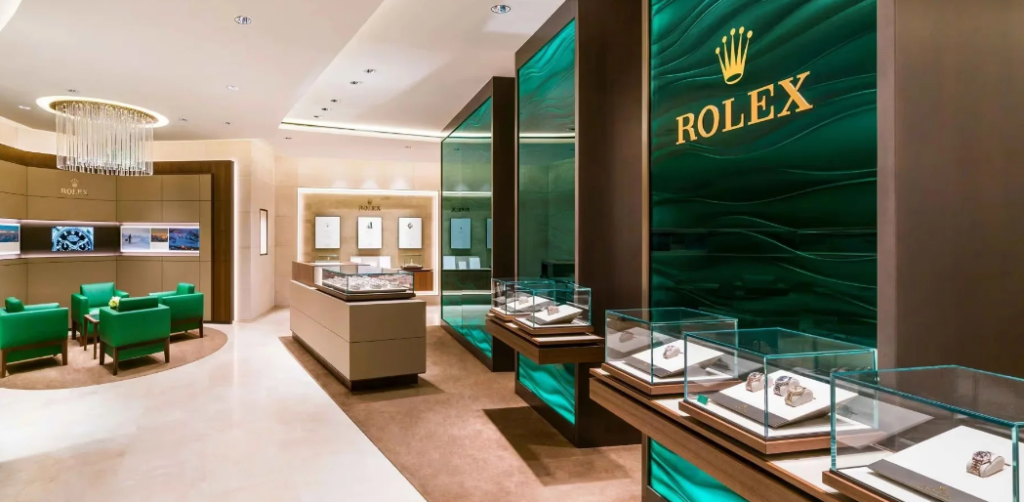
Rolex Wait Times 2026: Why Retail is Hard & How to Buy Now – EW Watches
Few luxury brands in the world carry the prestige, recognition, and mystique of Rolex. Whether spotted on the wrist of a successful entrepreneur, an athlete celebrating victory, or a collector showcasing rare timepieces, the iconic crown logo has long symbolized achievement and refinement.
But in today’s luxury marketplace, a Rolex watch represents more than just style. For many collectors and investors, it raises an interesting question:
Is Rolex simply a status symbol, or has it evolved into a valuable financial asset as well?
The answer, much like the intricate mechanics inside the watch itself, reveals a fascinating intersection of craftsmanship, culture, and economics.
The Origins of a Luxury Icon
Founded in 1905, Rolex built its reputation on precision engineering and innovation in watchmaking. The company pioneered numerous technological advancements that helped shape the modern wristwatch.
Rolex introduced the world’s first waterproof wristwatch, the Oyster, in 1926 and later developed the self-winding Perpetual movement that remains a hallmark of its designs.
Over the decades, Rolex watches became associated with exploration, achievement, and excellence. They accompanied climbers to the summit of Mount Everest, divers to extreme ocean depths, and astronauts into space.
These accomplishments helped establish Rolex as one of the most respected watchmakers in the world.
The Cultural Power of the Crown
While craftsmanship built Rolex’s reputation, cultural influence cemented its status.
Luxury watches have long served as symbols of success, but Rolex occupies a unique position in that space. The brand’s designs are instantly recognizable and widely respected across cultures and industries.
Entrepreneurs, athletes, entertainers, and business leaders frequently wear Rolex watches as markers of accomplishment.
Icons such as Michael Jordan and Roger Federer have helped reinforce the brand’s global prestige.
For many buyers, owning a Rolex represents a personal milestone, a reward for professional achievement or financial progress.
In that sense, Rolex undeniably functions as a “status symbol”.
The Investment Appeal of Luxury Watches
In recent years, however, luxury watches have gained attention for another reason: their potential as investment assets.
Certain Rolex models have demonstrated remarkable value appreciation over time, particularly limited or highly sought-after pieces such as the Submariner, Daytona, and GMT-Master II.
According to luxury market research from Statista, the global luxury watch market continues to grow as collectors increasingly view high-end watches as alternative investments.
Unlike many consumer products that depreciate immediately after purchase, some Rolex models maintain or even increase their value.
This phenomenon has led to a thriving secondary market where rare watches can sell for significantly more than their original retail price.
Supply, Demand, and Scarcity
One reason Rolex watches hold their value is controlled supply.
The company carefully manages production levels and distribution, which contributes to long waiting lists for certain models at authorized retailers.
This scarcity often drives demand in the secondary market, where collectors and enthusiasts are willing to pay premiums to acquire coveted pieces.
In essence, Rolex has successfully created a balance between availability and exclusivity.
That balance helps preserve the brand’s prestige while maintaining strong resale values.
Craftsmanship That Endures
Another factor behind Rolex’s enduring appeal is the brand’s commitment to quality.
Each Rolex watch is crafted with exceptional precision and undergoes rigorous testing before leaving the factory. The materials used, including corrosion-resistant steel, gold alloys, and sapphire crystals, are designed to withstand decades of use.
Unlike many luxury items that deteriorate over time, well-maintained Rolex watches often function reliably for generations.
This durability contributes to their long-term value and collectability.
A Watch That Tells More Than Time
For many owners, a Rolex watch carries emotional and symbolic significance beyond its market value.
It may commemorate a career milestone, celebrate a major life achievement, or represent the culmination of years of hard work.
Luxury items often tell stories about the journeys that led to their acquisition. In that sense, Rolex watches become personal artifacts as much as financial assets.
They represent moments, memories, and milestones.
Status Symbol or Valuable Asset?
So is Rolex a status symbol or a valuable asset?
The reality is that it functions as both.
Rolex watches continue to serve as globally recognized symbols of achievement and luxury. At the same time, their durability, brand prestige, and controlled supply have positioned them as desirable collectibles with potential investment value.
For some buyers, the appeal lies in prestige. For others, it lies in craftsmanship and financial appreciation.
But for many owners, the true value of a Rolex lies in the combination of all these factors.
Because while the watch may measure time, the journey it represents is timeless.




Be the first to comment